Эмоленты при атопическом дерматите у детей | БЭЙБИ КЛИНИК
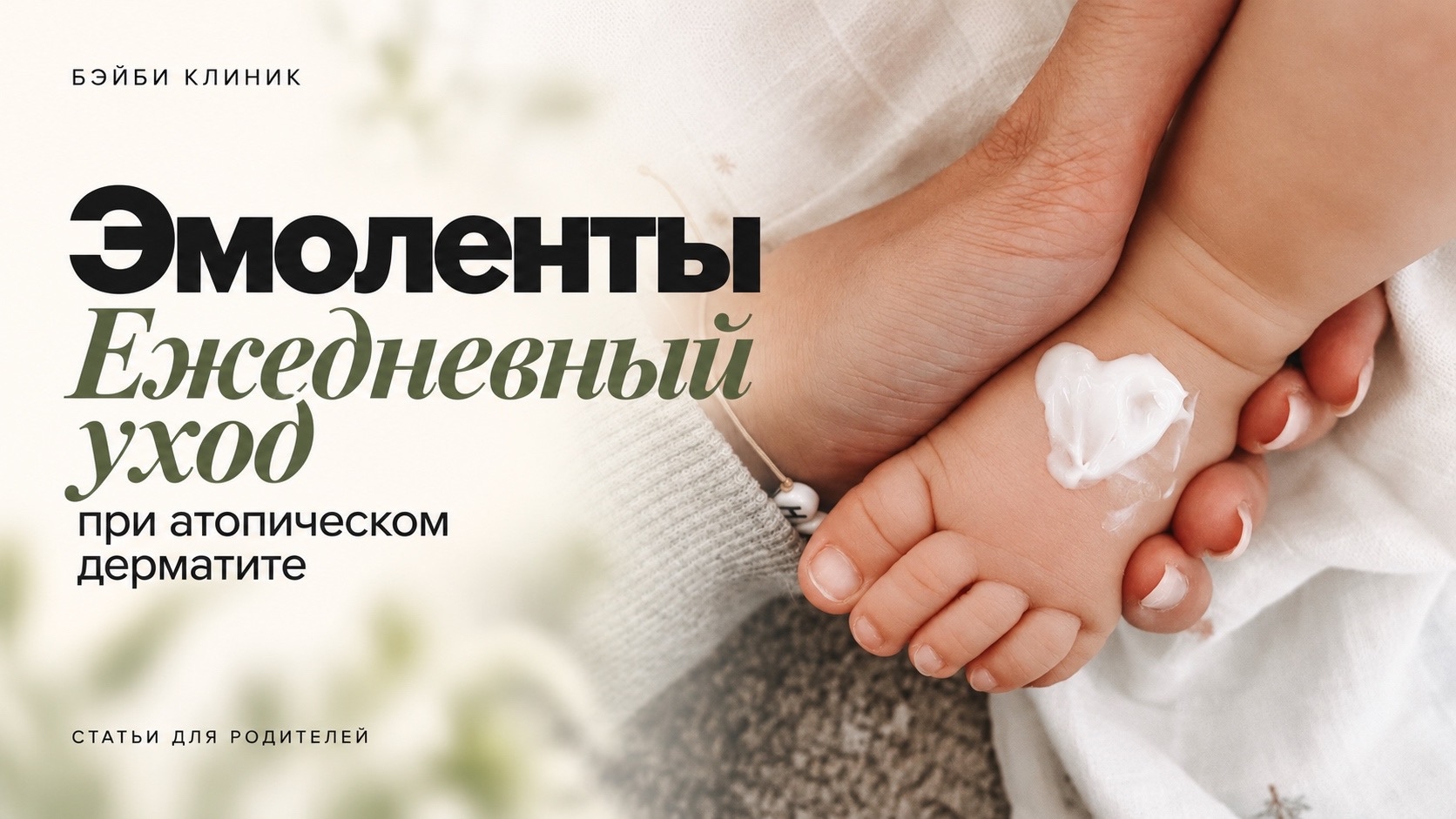
Emollients for atopic dermatitis in children
In atopic dermatitis, also called atopic eczema, the skin loses moisture more easily and is more vulnerable to irritation. Dryness, itching and inflammation can follow. Emollients support the skin barrier and help reduce moisture loss, so regular care continues between visible flares.
An emollient softens and moisturises skin. It is a central part of daily care, but active inflammation may also need prescribed treatment.
Choosing a product your child can use regularly
Look for fragrance-free products suitable for dry, sensitive skin. Thick creams and ointments are often helpful for pronounced dryness. A lighter texture may feel more comfortable during the day or in warm weather. The choice depends on the skin and whether the child will accept regular application.
There is no single best product for every child. “Natural” does not guarantee that a product will be non-irritating. Persistent stinging, increased redness or worsening itch should prompt a discussion about changing it.
Applying an emollient
Use it every day, usually at least twice daily and more often if the skin becomes dry again. Smooth it gently over dry skin. Widespread eczema may require whole-body moisturising. Avoid vigorous rubbing.
After a short bath in warm water, gently pat the skin and apply the emollient within the next few minutes while the skin is still slightly damp. Hot water, rough washing and fragranced bubble bath may increase irritation.
Use prescribed anti-inflammatory medicines according to the treatment plan. Apply different topical products separately, leaving several minutes between them. Do not mix them together in a container or in your hand unless specifically instructed.
How much is enough
A small tube may not provide enough for frequent whole-body care. NICE recommends providing 250–500 g of leave-on emollient per week for children under 12 with eczema. This is a guide to ensuring an adequate supply, not a fixed amount every child must use. Actual needs vary with age, skin area, texture and application frequency.
When to seek medical advice
Sleep-disrupting itch, cracked skin or poor response to care calls for a review of the treatment plan. Weeping, pustules or crusting may need assessment for infection. Painful clustered blisters, rapid deterioration or fever require urgent medical attention.
Frequently asked questions
Can we stop when the rash clears
Maintenance moisturising is usually continued to manage dryness between flares. A clear-looking patch of skin may still need regular care.
Are emollients steroid medicines
Ordinary emollients are not topical corticosteroids. A moisturiser and an anti-inflammatory medicine may be prescribed together because they have different roles.
At BabyClinic, parents can discuss a daily skin-care plan with a paediatrician and whether specialist assessment is needed.